
 Posted by
 My Bon Jovi story didn’t begin at Madison Square Garden.
It didn’t even begin in New York.
It began on a hot July evening in Norman, Oklahoma.
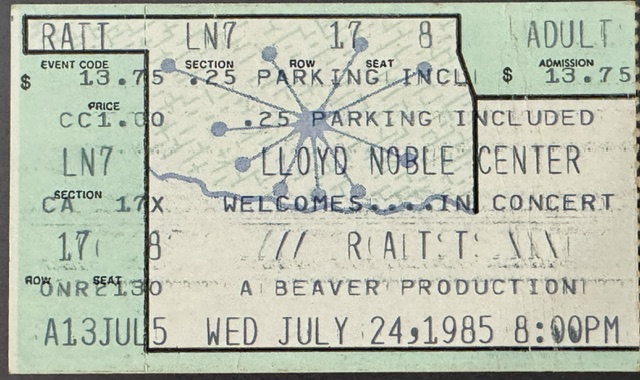
On July 24, 1985, I watched a young band from New Jersey open for Ratt at Lloyd Noble Arena during the 7800° Fahrenheit tour. Like most fans in attendance, I had no idea I was witnessing the early rise of a band that would soon become one of the biggest names in rock music. They weren’t headliners yet. They were simply another hungry band with something to prove.
Looking back, none of us could have imagined where that journey would lead.
Six years later, life had taken me to South Florida and The Art Institute of Fort Lauderdale. My roommate and I took on freelance videography assignments, covering everything from ballroom dancing at the Fontainebleau in Miami to charity galas and concerts throughout South Florida.
Looking back, we were just two Audio and Video students trying to build a portfolio. We had no idea we were about to witness what would become one of South Florida’s most memorable rock events.
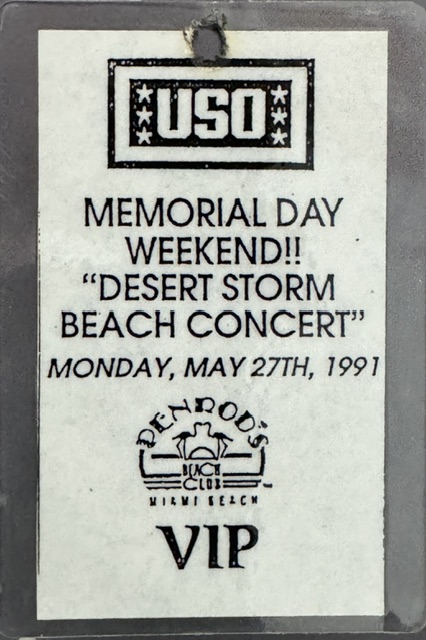
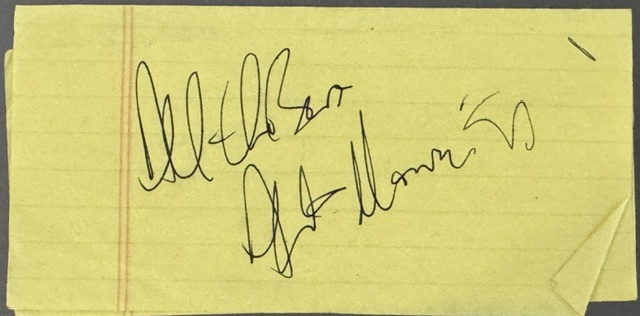
It was Memorial Day 1991 at Penrod’s Beach Club in Miami Beach. Promoted by WSHE-103 FM as a USO benefit featuring a “mystery guest,” the afternoon quickly transformed into an unforgettable five-hour jam session with Aldo Nova, Jon Bon Jovi, Scorpions, and Great White performing before more than 25,000 fans.
My roommate and I were positioned in the VIP area near Front of House (FOH), cameras ready, when tour personnel instructed us to put them away. We begrudgingly complied—but were thankful that we weren’t asked to leave! As two aspiring videographers, we were simply grateful to witness what would become one of the most memorable concerts of our college years.
Entertainment management replaced videography. Years were spent behind the scenes learning every facet of concert production—lighting, audio, staging, rigging, and the countless details that audiences rarely notice but that determine whether a performance succeeds or fails. Later came photography, and eventually Long Island Sounds & Beyond, where my goal has never been to criticize artists or rank performances, but to capture and share the experience of live music through both photographs and stories.
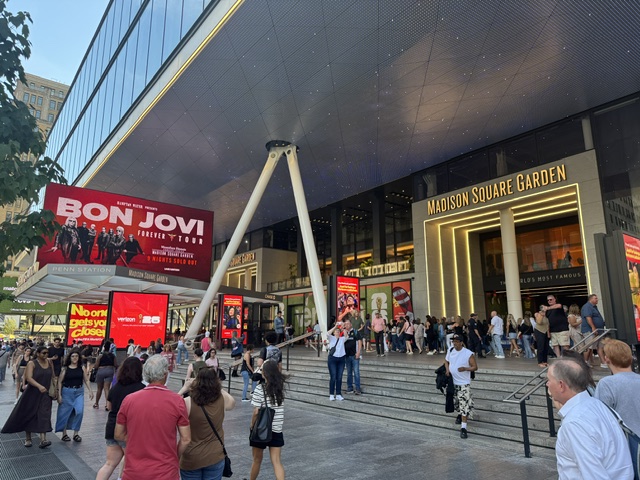
Which brings me to Madison Square Garden.
Forty-one years after first seeing Bon Jovi open for Ratt.
Thirty-five years after being asked to put my camera away.
I found myself once again walking into a Bon Jovi concert.
This time, I knew exactly why I was there.
Once again, I’d have to put my camera down—but this time for a very different reason.
After years spent in entertainment management, building Long Island Sounds, and photographing legendary artists including Judas Priest, Santana, Steve Vai, Slash, and many others, I’d be returning not as a student hoping for a lucky break, but as the voice behind Long Island Sounds & Beyond, there to experience and review one of rock’s most iconic bands.
Some stories take a little longer to come full circle.
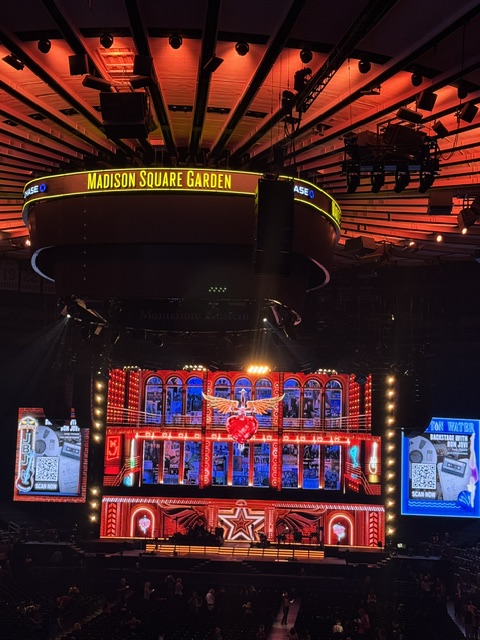
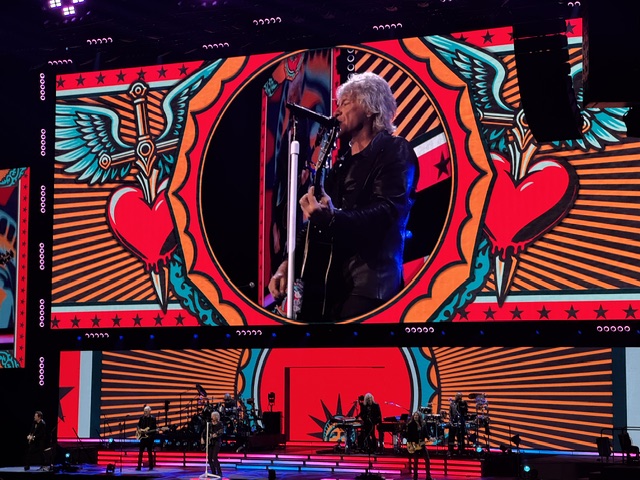
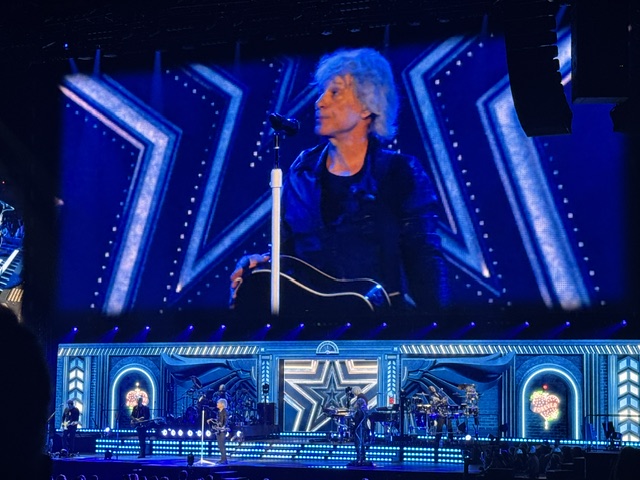
As the house lights dimmed, Jon Bon Jovi appeared in black and white across the towering 90-foot video screen. One by one, his bandmates joined him before a single note had been played, immediately setting the tone for an evening that would be about far more than music.
A pre-recorded message from Jon soon filled Madison Square Garden as he thanked both his fans and his bandmates for standing by him throughout his recovery from vocal cord surgery. As images of each band member appeared on the massive screens, his words reflected genuine gratitude for their loyalty, patience, and unwavering support during one of the most challenging chapters of his career. The heartfelt message resonated throughout the arena, earning one of the loudest ovations of the night before the band had even stepped onto the stage.
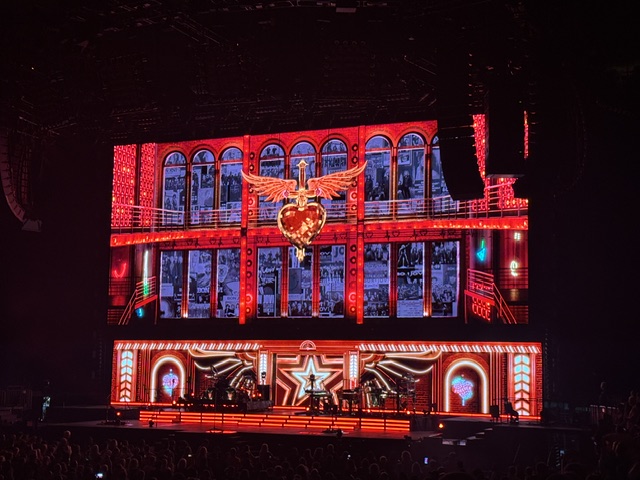
As the backdrop doors slowly opened, Jon emerged alongside David Bryan (keyboards), Tico Torres (drums), Phil X (lead guitar), Hugh McDonald (bass), John Shanks (guitar), and Everett Bradley (percussion and backing vocals). Together, they walked onto the stage carrying not only the weight of expectation but the excitement of returning to the venue that has long been synonymous with Bon Jovi’s history.
The opening moments of the Forever Tour immediately established the evening’s theme: this was a celebration of a legacy still being written.
Beginning with a heartfelt performance of “With a Little Help From My Friends,” Bon Jovi set the tone for a night built around gratitude, resilience, and the connection between an artist and the audience that has supported him for decades.
It was a fitting choice.
Because while Bon Jovi has always been associated with massive anthems, sold-out arenas, and unforgettable choruses, this evening was ultimately about the people who made the journey possible—the fans who continued to believe, and the band members who stood beside Jon through an uncertain chapter.
From the opening notes, Madison Square Garden responded exactly as one would expect.
They weren’t simply watching a performance.
They were participating in it.
From my location in the lower bowl, the overall house mix was respectable, though not without its challenges. At times, the instrumentation seemed to overshadow Jon Bon Jovi’s vocals, making some lyrics difficult to distinguish. Given his well-documented recovery from vocal cord surgery, it wouldn’t be surprising if the front-of-house mix was intentionally designed to support and protect his voice throughout the performance.
Where the mix truly excelled was during the instrumental passages. Phil X’s guitar work consistently cut through with exceptional clarity, allowing each solo to breathe without overpowering the rest of the band. The balance between lead guitar, keyboards, and rhythm section was well executed, showcasing the musicianship that has long been a hallmark of Bon Jovi’s live performances.
Some concerts entertain. Others remind us why we fell in love with live music in the first place.
Bon Jovi’s return to Madison Square Garden was one of those evenings.
The setlist moved effortlessly through different eras of Bon Jovi’s extensive catalog.
Songs like “Lost Highway,” “Who Says You Can’t Go Home,” and “We Weren’t Born to Follow” reminded the audience that Bon Jovi’s story didn’t end with the iconic hits of the 1980s and early 1990s. The band has continued evolving, creating music that reflects different chapters of both the band and its fans.
Then came the moments everyone knew were inevitable.
The opening strains of “You Give Love a Bad Name” immediately transformed Madison Square Garden into one massive choir. It was followed by “Born to Be My Baby,” another reminder of why Bon Jovi’s songwriting has remained so enduring.
These songs are more than popular recordings.
They are cultural touchstones.
One of the most impressive aspects of the evening was the musicianship surrounding Jon Bon Jovi.
While Jon has always been the unmistakable face of the band, Bon Jovi’s longevity has always been supported by exceptional musicians who understand how to balance precision with personality.
David Bryan remains one of rock’s most recognizable keyboard players, bringing both energy and emotion to the performance. Tico Torres continues to provide the foundation that has driven Bon Jovi’s sound for more than four decades.
And on guitar, Phil X delivered a performance that honored the legacy of Richie Sambora while confidently establishing his own identity within the band.
That is not an easy task.
Replacing a beloved guitarist in a legendary band comes with enormous expectations, but Phil X approached the role with both respect and confidence. His tone was powerful, his playing was precise, and his solos provided some of the evening’s strongest musical moments.
Naturally, Jon’s voice has evolved since undergoing major vocal cord surgery, and expecting him to sound exactly as he did in the late 1980s would be both unfair and unrealistic. What remains unchanged, however, is his unmistakable passion for performing. There was grit, determination, and conviction in every song, reminding the audience that great performances are measured by far more than vocal perfection.
The Forever Tour isn’t about trying to recreate the past. It’s about celebrating a remarkable career, embracing the present, and demonstrating that Bon Jovi still has plenty left to offer. Judging by the standing ovations, deafening sing-alongs, and overwhelming emotion that filled Madison Square Garden from the opening moments through the final encore of “Always,” this wasn’t simply a successful comeback.
It was one that had been earned.
That may have been the most noticeable thing about the evening: Bon Jovi has become a true multi-generational experience. The crowd wasn’t limited to those who discovered the band in the 1980s and 1990s. There were couples in their 30s, longtime fans reliving their youth, parents sharing the experience with their children, and plenty of longtime admirers embracing a nostalgic trip back through the decades. It was a family-friendly celebration where everyone seemed to have their own personal connection to the music.
The emotional highlights of the evening came through songs that have become personal soundtracks for generations of fans.
“Bed of Roses” brought a different energy to the room, shifting the atmosphere from celebration to reflection. The same could be said for “It’s My Life,” a song that has taken on an entirely new meaning over the years.
For many fans in attendance, this wasn’t simply a performance of a hit song.
It was a reminder.
Life moves quickly.
Moments matter.
And sometimes the songs we grew up with return at exactly the right time.
As the lead vocalist of Long Island’s premier Bon Jovi tribute band, Bad Medicine, Steve Sage attended the first and third performances during Bon Jovi’s Madison Square Garden run. For someone who has spent years performing these songs, the concerts carried a deeper significance.
“Watching Jon Bon Jovi return to the stage after vocal cord surgery was an emotional experience. The anticipation inside Madison Square Garden was incredible, and from the opening notes, the crowd erupted in celebration. It wasn’t just another concert—it felt like a welcome home.”
By the third show, Steve noticed a remarkable difference.
“The band seemed even more relaxed and confident. Jon was completely in command, guiding the band with subtle cues while delivering a performance that reminded everyone why Bon Jovi remains one of rock’s premier live acts. Hearing ‘Bed of Roses’ and ‘Always’ again brought back memories of performing those songs myself years ago, making the evening even more meaningful.”
For Steve, the concerts were more than a chance to see one of his musical heroes—they were an opportunity to witness the passion, professionalism, and musicianship that continue to inspire performers like himself.
Whether you’ve followed the band since the 7800° Fahrenheit days or you’re discovering their music for the first time, this tour is a celebration of perseverance, musicianship, and a catalog of songs that have become part of rock history.
Jon Bon Jovi has earned his place among the legendary figures of popular music, and seeing him perform in 2026 isn’t simply attending another concert—it’s witnessing a living piece of rock and roll history.
The crowd itself may have been the greatest testament to Bon Jovi’s enduring impact.
The most amusing reminder that music truly belongs to every generation came from one particularly enthusiastic young fan standing directly in my line of sight for much of the evening.
A minor inconvenience?
Perhaps.
But also a wonderful reminder.
She wasn’t standing because she was being inconsiderate.
She was standing because she was experiencing Bon Jovi the same way countless fans had for decades.
With excitement.
With joy.
With absolutely no intention of sitting down.
Forty-one years after first seeing Bon Jovi as an opening act in Oklahoma, I walked out of Madison Square Garden without a single concert photograph. And for once, I realized I didn’t need one. Some moments are simply meant to be experienced.
Editor’s Note
Unlike most features published on Long Island Sounds & Beyond, this article contains very few concert photographs. While photography has always been the foundation of this publication, Madison Square Garden’s photography policy presented a unique opportunity to document this performance in a different way—not through a camera lens, but through memories, observations, and the shared experience of one unforgettable evening.
Having spent years on the production side of entertainment, I understand how many moving parts are required to create a seamless arena production. A successful show isn’t just about what happens on stage—it is the result of countless decisions made by musicians, technicians, engineers, and crew members working together behind the scenes.
 Long Island Sounds