 Posted by
 Truth be told, I’m an old-school country music listener.
My musical roots go back to the Outlaw Country cowboys—Kris Kristofferson, Willie Nelson, Merle Haggard, Waylon Jennings and, of course, Johnny Cash. In fact, my appreciation for country music started even earlier than that.
My grandfather was a huge fan of Hee Haw, and through him I was introduced to the music of Roy Clark, Glen Campbell and Buck Owens. Hank Williams Jr. was a little too conventional for his taste, although my mother eventually introduced me to his music as well.
Then came the 1980s.
Somewhere along the way, I drifted away from what was becoming “new country.” Travis Tritt, George Strait, Randy Travis and Reba were certainly talented, but country music just wasn’t occupying much space on my musical radar anymore.
And then came Garth Brooks.
By the time Garth exploded onto the country music scene, I had pretty much convinced myself that country music wasn’t my thing anymore. I resisted the hype, the radio saturation and what seemed like an endless stream of mainstream country.
Eventually, I gave in.
And I’m glad I did.
There was something about certain Garth Brooks songs that got past all the hype and went straight for the emotions. “Unanswered Prayers,” “If Tomorrow Never Comes” and, of course, “That Summer” were among the songs that reminded me why I loved country music in the first place.
Which brings me to J.D. Leonard.
A Country Connection
I had become friends with Diane Lutz during her time with Bad Animals and maintained a friendship with her over the years. One day, she asked me if I had ever heard of J.D. Leonard.
She told me she would be performing the role of Trisha Yearwood in J.D.’s Garth Brooks tribute production at the Argyle Theater.
Being a former Garth Brooks fan, I figured it was a pretty good opportunity to get my country fix.
I reached out to J.D., who graciously put me on the guest list. In return, I brought my camera and provided him with a few photographs from the performance.
That evening turned out to be the beginning of what would become a very good friendship.
And, as I tend to do, I started researching the guy I had just met.
I quickly discovered that J.D. Leonard was far more than the Garth Brooks tribute artist I had gone to see.
More Than a Tribute
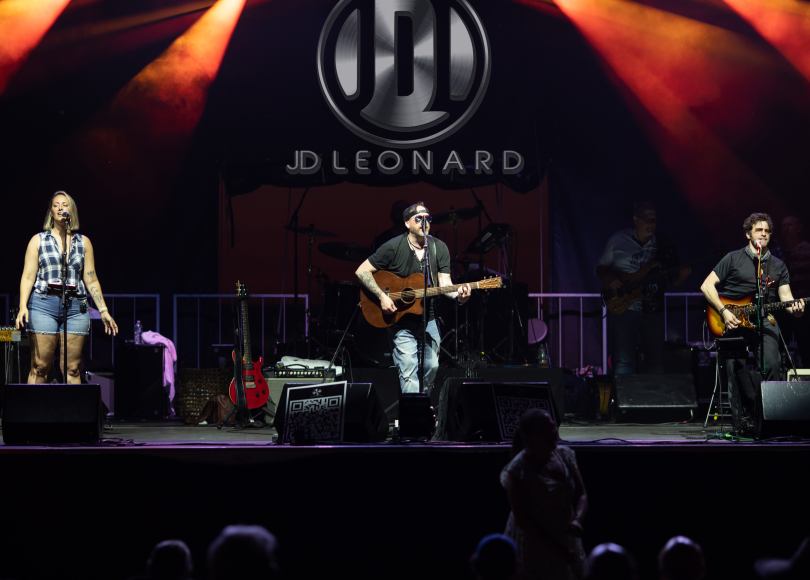
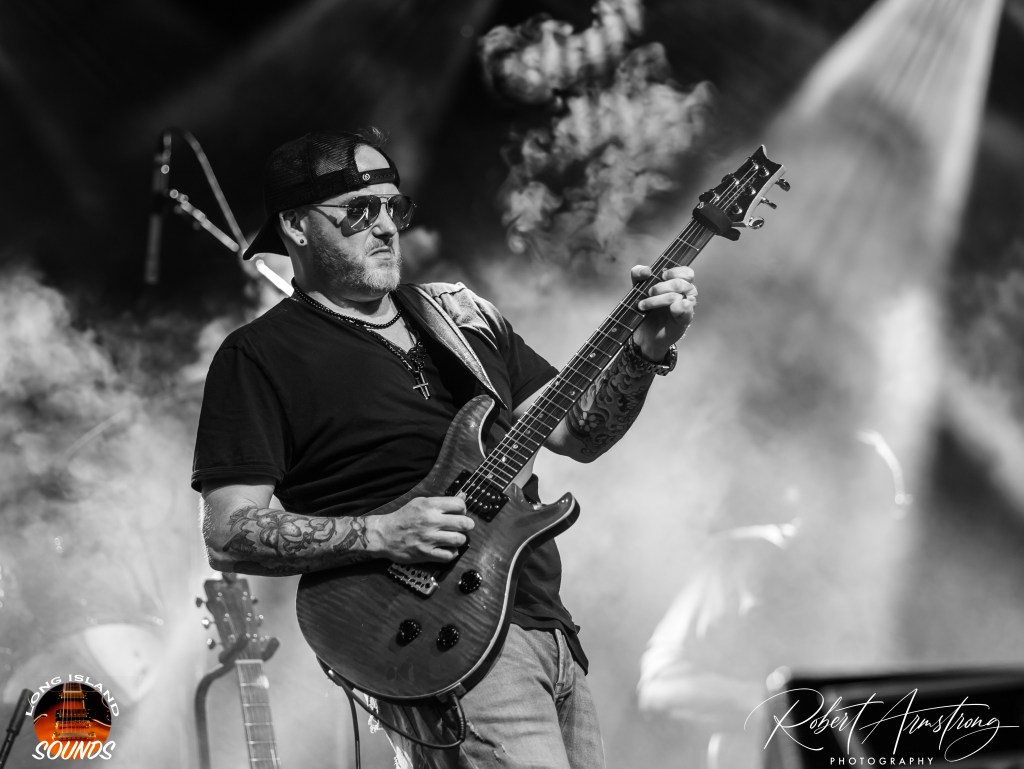
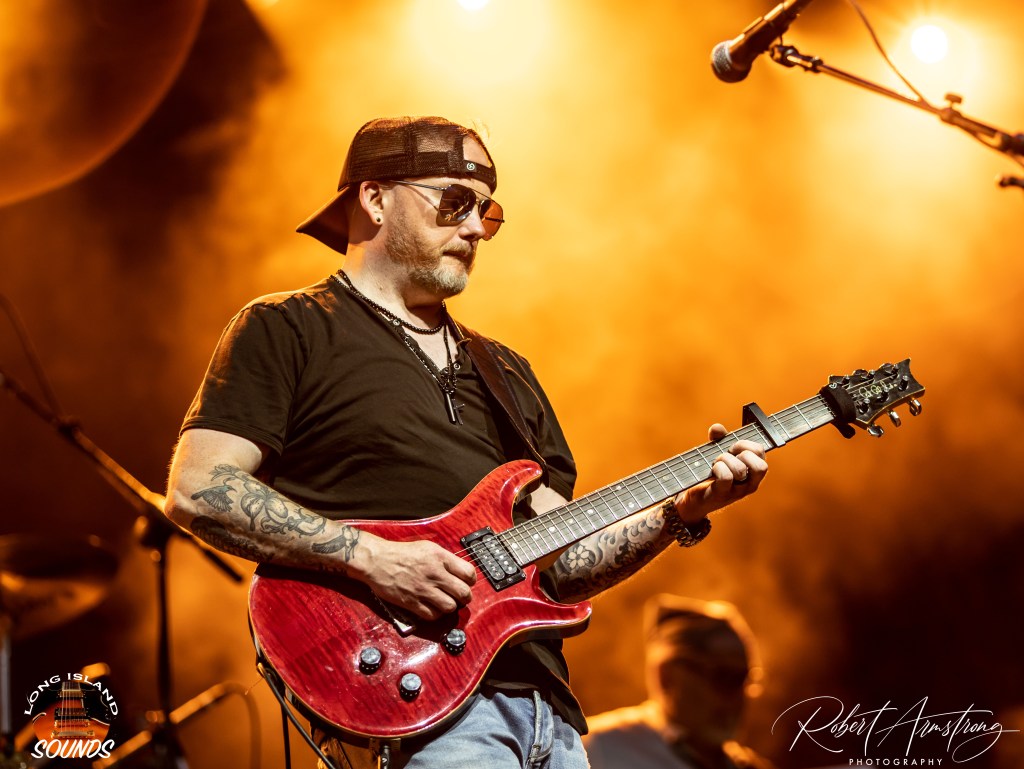
J.D. Leonard is a country-rock singer, songwriter and guitarist who has carved out an interesting place in the music world by bridging two seemingly different environments: the storytelling traditions of Nashville and the energy of the New York metropolitan music scene.
Born in Tennessee and raised in North Carolina, J.D.’s Southern roots are evident in his approach to songwriting and performance. But there is nothing particularly quiet about the way he brings those roots to the stage.
His music combines country storytelling with driving guitars, powerful vocals and the kind of hooks that stay with you.
That combination has allowed him to build a career that extends well beyond the tribute circuit.
His studio album Just Drive, produced alongside Nashville industry veteran David Huff, represents a decade of personal stories dealing with heartbreak, resilience, relationships and, appropriately enough, the open road.
J.D. has also established himself as a songwriter for other artists. Among his notable credits is co-writing “Love Is the Knife” for international superstar Bonnie Tyler’s album Rocks and Honey. His songwriting has also found its way into television, film and commercial projects, and he has occasionally worked in music supervision.
In other words, the Garth Brooks hat is only one part of J.D. Leonard’s musical wardrobe.
The Garth Brooks Connection
Of course, I can’t talk about J.D. Leonard without returning to Garth Brooks.
There’s a reason tribute productions exist: audiences want to relive the music that meant something to them.
J.D. understands that.
His Garth Brooks production isn’t simply about putting on a cowboy hat and singing familiar songs. It’s about recreating the energy, personality and emotion associated with one of country music’s most recognizable performers.
And having watched J.D. perform it, I can tell you that he takes the responsibility seriously.
But what makes the experience even more interesting to me is knowing that the guy portraying Garth Brooks is also a successful original artist in his own right.
That distinction matters.
The Backbone Behind the Productions
While J.D. may be the face and driving force behind his productions, no successful live show is built around one person.
Over the years, he has assembled a remarkable group of musicians who have become part of the extended J.D. Leonard musical family. Some have become key players across multiple productions, while others rotate depending upon the demands and scheduling of each show.
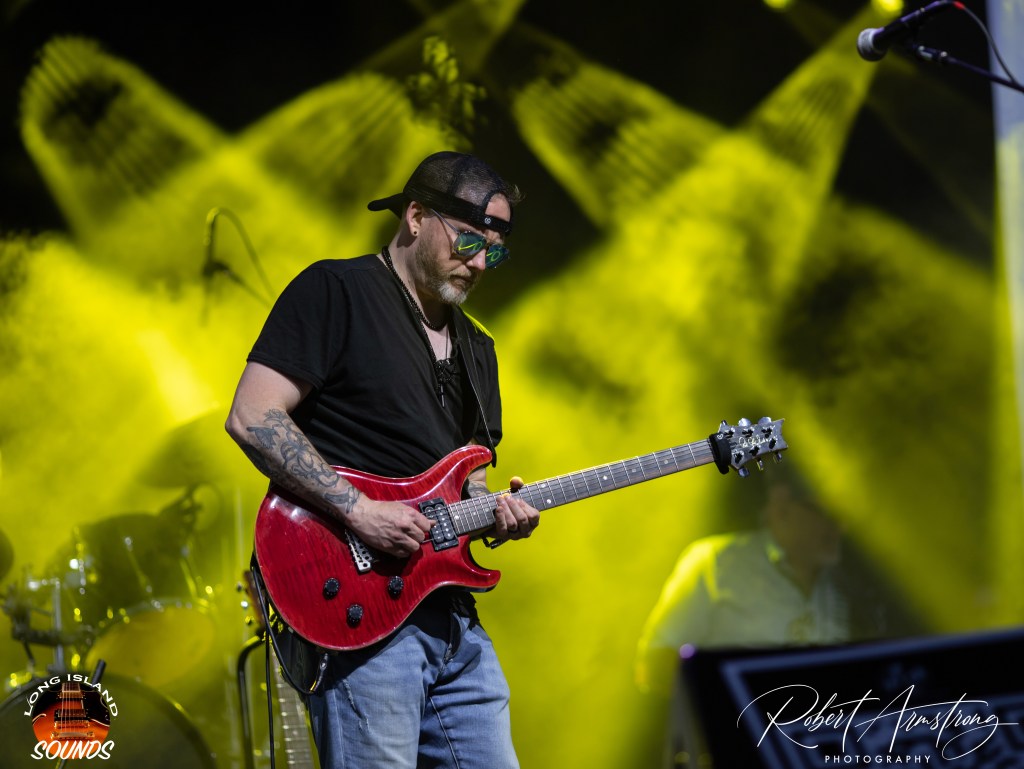
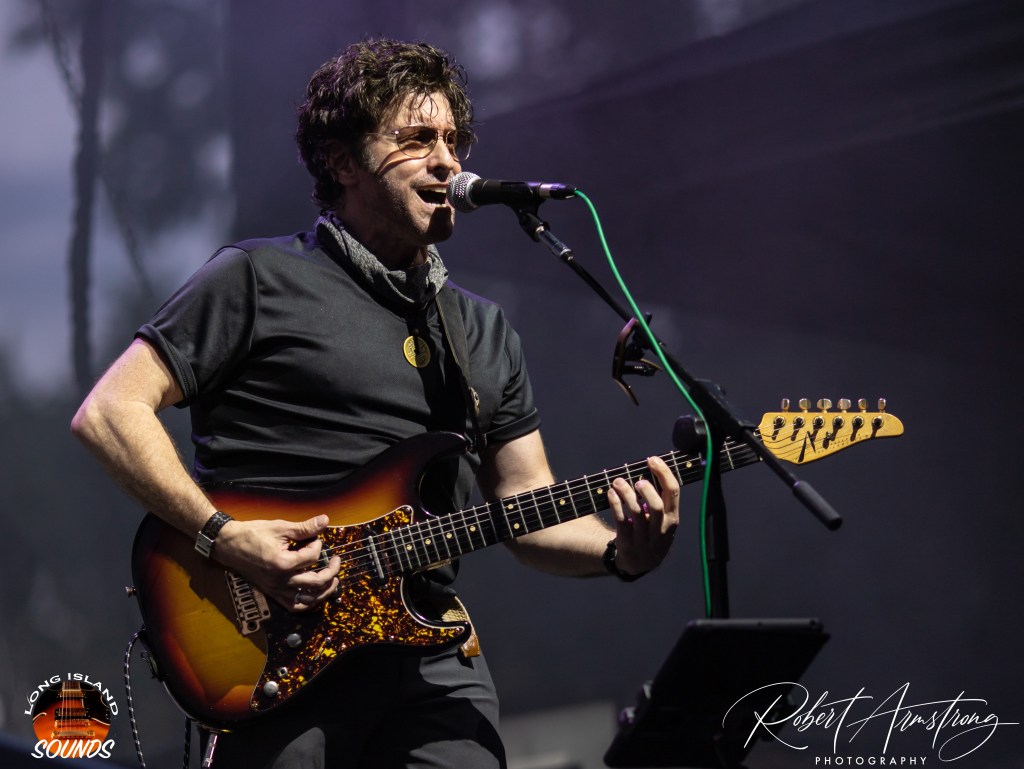
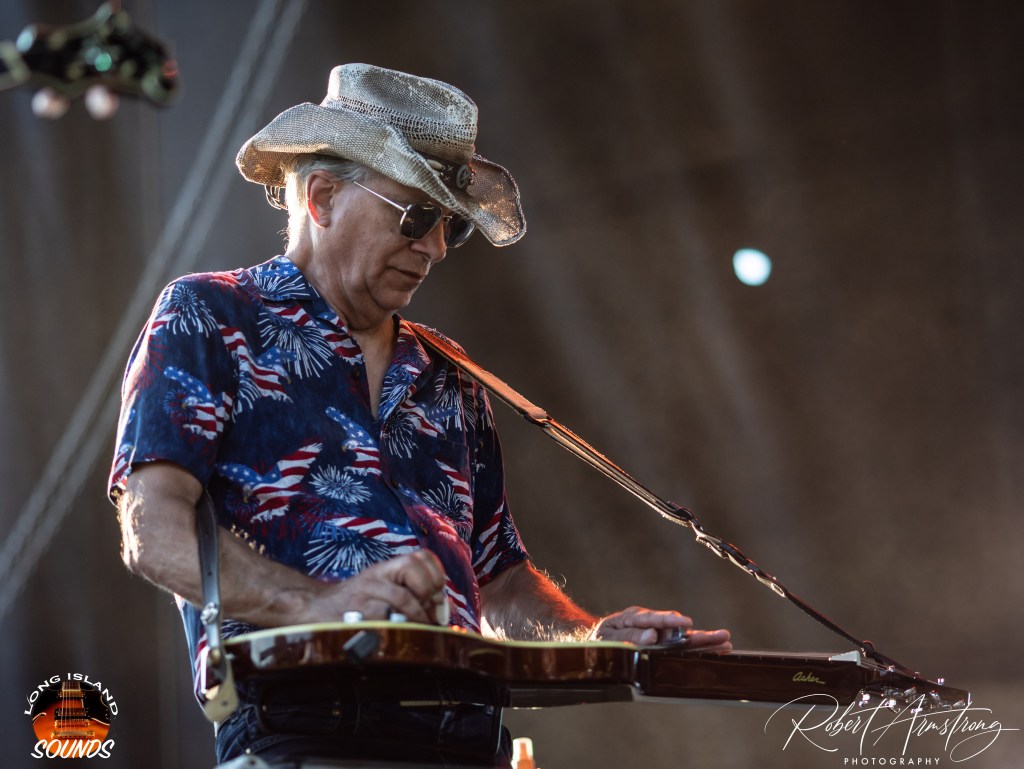
Among those core musicians are Steve Ronsen on lead guitar, Lenny Roccio on bass, and Mike DeLuca on lap steel and fiddle.
Together, they provide much of the musical backbone that allows J.D. to move seamlessly between the polished sound of Garth Brooks, traditional country and the broader spectrum of Decades of Country.
Steve brings the guitar-driven energy, Lenny anchors the rhythm section, and Mike adds the unmistakable country textures of lap steel and fiddle.
Mike’s fiddle work becomes particularly prominent when he takes center stage for “The Devil Went Down to Georgia”—one of those moments when a supporting musician suddenly becomes one of the evening’s focal points.
Behind the scenes and on stage, Mike Sorrentino on drums, Anthony Raffa and Frank Stainkamp on keyboards are also major contributors across J.D.’s various productions. Their versatility allows J.D. to move between different musical styles and production formats while maintaining a consistent level of musicianship.
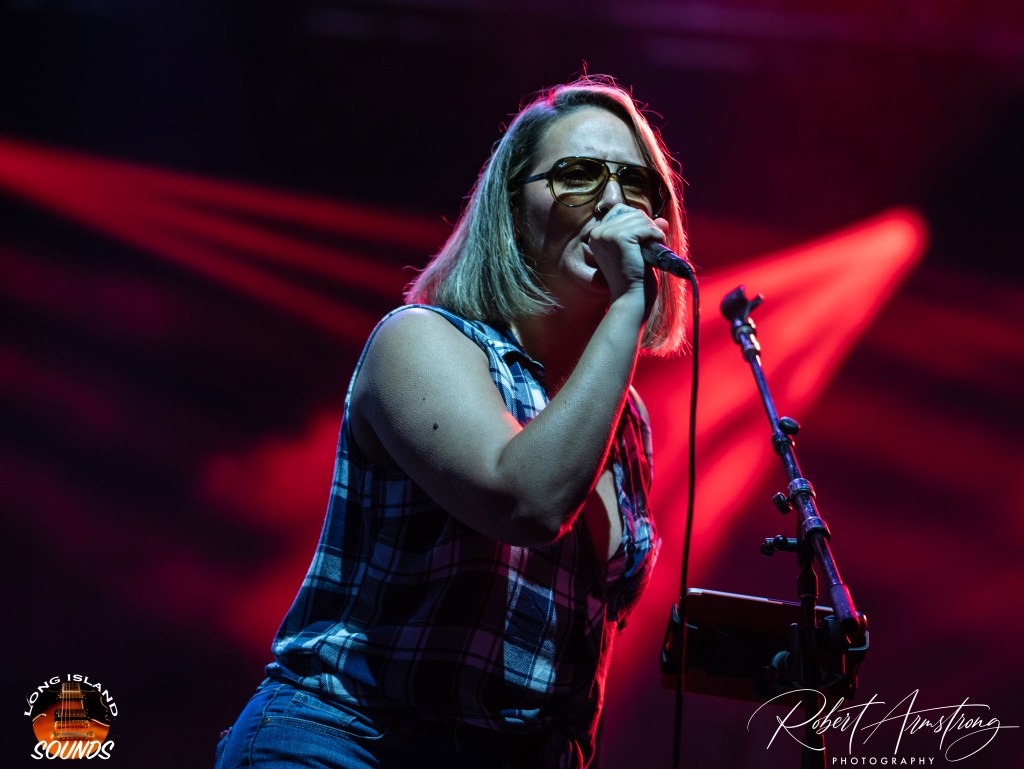
And then there are the ladies who have become an important part of J.D.’s larger productions. Depending upon the show and scheduling, audiences may see Diane Lutz, Karen Kateridge, Joie Giordano or Bianca Mabanta sharing the stage with him.
The lineup may change from one performance to another, but that isn’t necessarily a reflection of the production itself. Rather, J.D. has cultivated a deep roster of talented musicians and vocalists, allowing him to build the right ensemble for the particular show.
That’s part of the reason his productions can feel so polished and complete.
Decades of Country
Perhaps nowhere is J.D.’s versatility more apparent than with Decades of Country.
Rather than limiting himself to one artist or one era, J.D. fronts a high-energy country concert experience celebrating decades of country music—from the sounds of the 1980s through today’s chart-topping artists.
But J.D. has expanded the concept beyond simply revisiting the hits of recent decades.
In fact, the production begins by reaching back to country music’s roots with “Will the Circle Be Unbroken.”
It’s a fitting introduction to a show built around the idea that country music isn’t a collection of isolated eras, but a musical lineage passed from one generation to the next.
From traditional country, the show travels through the decades and ultimately arrives at today’s country stars, including Garth Brooks, Luke Combs and Morgan Wallen.
It’s a concept that fits J.D. particularly well because he isn’t simply standing on stage recreating songs.
He’s an entertainer.
And he’s surrounded himself with musicians who understand that a great country show isn’t simply about playing the notes. It’s about energy, interaction and connecting with the audience.
J.D. has also made a point of working with talented Long Island musicians, including collaborations that have placed him on stage with New York music veterans such as Richie Cannata, the legendary saxophonist best known for his longtime association with Billy Joel.
More Than Country
J.D.’s musical versatility doesn’t stop with country music.
In addition to his Garth Brooks tribute and Decades of Country, he also fronts a Steve Miller tribute production, giving him yet another opportunity to step outside the country genre and explore a completely different musical catalog.
It also speaks to something I’ve come to appreciate about J.D.: he isn’t confined to a single musical identity.
Country may be at the heart of much of what he does, but his ability to move comfortably between genres is a significant part of what makes him such a versatile entertainer. You should here his rendition of Prince’s Purple Rain!!
Whether he’s performing Garth Brooks, celebrating generations of country music, paying tribute to Steve Miller, performing his own original material or simply sitting down with an acoustic guitar at a Long Island pub, the common denominator remains the same.
J.D. Leonard is a musician first.
The Artist Behind the Tribute
I’ve written about several incredible tribute musicians through Long Island Tribute Legends, and one thing I’ve learned is that the best tribute artists aren’t necessarily people who simply want to sound like someone else.
Many are accomplished musicians who have found a creative way to celebrate the artists who influenced them while continuing to develop their own identities.
J.D. Leonard is a perfect example.
He can step onto a stage and become Garth Brooks.
He can front Decades of Country and take an audience through several generations of country music.
He can step into a Steve Miller production and explore another musical catalog entirely.
And then he can put the tribute aside, pick up his guitar and perform his own songs.
That’s several very different sides of the same musician.
Perhaps the best example of that original side is his own song “Drive.”
The song is a reminder that underneath the tribute productions and elaborate live shows is a songwriter with his own stories to tell.
When the Production Gets Small
For all the production, musicians and energy that come with J.D.’s larger shows, there is another side to him that I particularly enjoy.
When he’s not portraying Garth Brooks or fronting Decades of Country, you can often find J.D. playing at one of Long Island’s many pubs and eateries with nothing more than an acoustic guitar and a small PA system.
There are no elaborate productions, no full band and no costumes—just J.D., his guitar and a collection of songs that span country and pop.
It’s a different kind of performance, but perhaps one that reveals the musician underneath everything else.
Stripped down to the basics, there’s nowhere to hide. The songs, the voice and the connection with the audience have to carry the evening.
And J.D. seems equally comfortable in that environment.
Whether he’s standing center stage with a full production behind him, surrounded by his core musicians, or sitting with an acoustic guitar in a local Long Island establishment, the objective remains the same:
Play good music, entertain the audience and make people want to come back.
A Musician Who Doesn’t Stop
J.D.’s schedule alone tells you something about his work ethic.
He has performed as many as 275 shows in a year, maintaining a schedule that would exhaust most musicians.
Between his tribute productions, Decades of Country, his original music, collaborations and other projects, J.D. Leonard has managed to build something that is becoming increasingly rare in today’s music business: a career based on versatility.
He’s a tribute artist.
He’s a songwriter.
He’s an original recording artist.
He’s a bandleader.
He’s a producer and entertainer.
And, fortunately for me, he’s also become a good friend.
When Diane first mentioned his name, I thought I was simply going to get my country music fix by watching a Garth Brooks tribute.
I didn’t realize I was about to meet a musician whose career went considerably deeper.
That’s the part of J.D. Leonard’s story that I find most interesting.
He’s not simply paying tribute to the music that came before him. He’s still writing his own story.
And perhaps that’s the best definition of J.D. Leonard of all.
 Long Island Sounds